


If your building needs specialized electrical power such as three-phase systems, transformers, or voltage conversion, ADP Electrical can design and install the right system for your equipment. Contact us today for a free quote.
So, you’ve probably heard about 480V 3-phase power, especially if you work in or around industrial settings. It’s not something you see in your average house, but it’s a big deal for running some serious equipment. Think factories, big office buildings, that kind of thing. This article is going to break down what 480V 3-phase power actually is, why it’s used, and where you’ll find it. We’ll look at how it works, the different ways it’s set up, and why it’s often the go-to choice for heavy-duty applications. Plus, we’ll touch on staying safe and following the rules when you’re dealing with this kind of power.
Key Takeaways
480V 3-phase power is a common electrical setup for industrial and large commercial buildings, used for powering heavy machinery and large systems.
It works by using three alternating currents, offset by 120 degrees, to provide a steady and efficient flow of power.
Common configurations include the Wye (480Y/277V) for mixed loads and Delta (3-wire) for specific industrial uses.
Benefits include better efficiency, reduced conductor size, and improved equipment lifespan compared to lower voltages.
Working with 480V 3-phase power requires strict adherence to safety codes like the NEC and awareness of hazards such as arc flash.
Understanding 480V 3-Phase Power Fundamentals
What Is 480V 3-Phase Power?
So, what exactly is 480V 3-phase power? Think of it as the heavy-duty electrical workhorse for businesses and industries. Unlike the single-phase power you likely have at home (the kind that runs your lights and toaster), 3-phase power uses three separate alternating current (AC) power lines. These lines are offset from each other by 120 degrees, which creates a really smooth and consistent flow of electricity. The “480V” part just tells you the voltage, or the electrical pressure, between any two of those three lines. It’s a standard in the United States for places that need a lot of juice to run big equipment.
Converting Power for Specialized Equipment
Many buildings only have 240V single-phase power, but certain equipment requires three-phase electricity or higher voltage.
Electricians can modify the electrical system to meet these requirements using:
• Phase converters to convert single-phase power into three-phase power
• Step-up transformers to increase voltage (for example 240V to 480V)
• Step-down transformers when equipment requires lower voltage
• Dedicated electrical panels designed specifically for the equipment
These solutions allow electrical systems to be customized so equipment receives the exact power it requires.
How 480V 3-Phase Power Works
Imagine three waves of electricity, all moving together but slightly out of sync. That’s essentially 3-phase power. Because these waves are staggered, the power never really drops to zero. This is super important for motors and heavy machinery because it means they get a steady stream of energy, which helps them run more efficiently and last longer. This system is a common method for generating, transmitting, and distributing alternating current electrical power. The higher voltage also means less current is needed to deliver the same amount of power compared to lower voltages, which has some pretty neat benefits we’ll get into later.
Key Differences From Lower Voltages
When you compare 480V 3-phase to something like 120/208V or 240V, the differences are pretty significant. For starters, 480V is considered “low voltage” by industry standards, even though it’s much higher than residential power. This higher voltage allows for:
More Power Delivery: You can push more watts through the same size wires.
Reduced Current: Less current means less heat generated in the wires.
Smaller Conductors: Because the current is lower, you can use thinner, less expensive wires and conduits.
Less Voltage Drop: Power can travel further without losing significant voltage.
While 120V or 240V might be fine for smaller shops or specific equipment, 480V is the go-to for anything that really draws a lot of power, like big industrial motors or large air conditioning units in commercial buildings. It’s just a more practical and cost-effective solution for high-demand applications.
This system is a standard in the United States for places that need a lot of electrical power. You’ll find it powering everything from massive factory machines to the HVAC systems in large office buildings. Understanding how three-phase electric power works is key to appreciating why 480V is so prevalent in these settings.
Applications Requiring 480V 3-Phase Power
So, where do you actually see this 480V 3-phase power being used? It’s not something you’ll find powering your toaster at home, that’s for sure. This kind of juice is reserved for the heavy hitters, the places that need a serious amount of reliable energy to get their jobs done. Think big factories, massive office buildings, and anywhere with machinery that works hard all day long.
Industrial Machinery And Heavy Equipment
This is probably the most common place you’ll run into 480V 3-phase. Large electric motors are the workhorses of industry, driving everything from conveyor belts and pumps to massive presses and lathes. These motors need a lot of power, especially when they first start up, and they need it consistently. 480V 3-phase power provides the steady, balanced current that these motors require to operate efficiently and without excessive wear. Using lower voltages would mean much thicker, more expensive wires and significant power loss over distance. It’s all about getting the job done without breaking the bank on electrical infrastructure or constantly replacing worn-out parts.
Large Commercial HVAC Systems
Keeping large buildings comfortable requires some serious HVAC (Heating, Ventilation, and Air Conditioning) equipment. We’re talking about huge compressors, powerful fans, and complex air handlers. These systems often run for extended periods, and they draw a substantial amount of power. 480V 3-phase is the go-to for these applications because it can handle the high current demands without needing ridiculously thick cables. It also helps maintain a stable temperature, which is pretty important in places like data centers or hospitals where equipment can overheat easily.
Extensive Lighting Installations
While you might think of lighting as a smaller load, think about the lighting needed for a massive warehouse, a sports stadium, or even a large outdoor parking lot. These aren’t just a few bulbs; they’re often high-intensity fixtures that need a consistent power supply. 480V 3-phase can power these extensive lighting grids efficiently. It helps prevent flickering and ensures a uniform light output, which is better for visibility and safety. Plus, running lights at this higher voltage can actually save energy compared to lower voltage systems, especially over long runs of wire.
When you’re dealing with equipment that needs a lot of power, especially motors that start and stop frequently or run continuously, 480V 3-phase is usually the most practical and cost-effective solution. It’s designed for the demands of heavy-duty operations.
Here’s a quick look at why 480V is preferred in these scenarios:
Power Delivery: It can handle high power demands for large machinery and systems.
Efficiency: Less current is needed for the same amount of power compared to lower voltages, reducing energy loss.
Cost Savings: Smaller conductors (wires) can be used, cutting down on material and installation costs.
Equipment Life: Provides a more stable power flow, which is gentler on motors and other equipment, potentially extending their lifespan.
Common 480V 3-Phase Configurations
The Versatile Wye Configuration
When you’re talking about 480V 3-phase power, the Wye configuration is what you’ll run into most often, especially in newer industrial and large commercial buildings. Think of it like a star shape, hence the “Y” name. This setup is popular because it gives you two different voltage levels from the same system. You get 480 volts between any two of the three “hot” wires, which is perfect for running big motors and heavy machinery. But, it also provides 277 volts from any of those hot wires to a neutral wire. This 277V is super handy for powering lights, especially those high-intensity fluorescent or LED fixtures you see in warehouses and big office spaces.
This dual-voltage capability makes the Wye system really flexible. It’s often called a “4-wire” system because, in addition to the three phase conductors, there’s a neutral conductor. The technical name you’ll see is 480Y/277V, where the “Y” shows the Wye connection and the “480/277V” tells you the voltages available.
The Three-Wire Delta Configuration
The Delta configuration is a bit simpler, usually just a “3-wire” setup. In this system, there’s no neutral wire. You get 480 volts between any two of the three hot wires, just like in the Wye system. This is great for powering equipment that needs that full 480V, like certain types of motors or industrial heaters. However, you don’t get that lower 277V option for lighting directly from the system. If you need 277V lighting in a Delta system, you’d typically need a separate transformer to step down the voltage.
Delta systems are often found in older industrial facilities. While they’re perfectly capable of delivering power, the lack of a neutral wire means they’re less common for new installations where the flexibility of dual voltages is desired. It’s a solid, straightforward setup for specific high-power needs.
Understanding Voltage Variations
It’s not just about Wye or Delta; sometimes you’ll see slight variations or specific uses. For instance, a “corner-grounded” Delta system might be used in some specialized applications, though it’s less common and has specific safety considerations. Also, while 480V is the standard, you might encounter systems that are technically rated slightly higher or lower, but 480V is the workhorse for industrial and heavy commercial use. The key takeaway is that the configuration (Wye or Delta) dictates the voltages available and how the power is distributed to your equipment. Always check the specific labels and diagrams on your electrical panels and equipment to be sure of the exact configuration and voltage you’re dealing with.
When you’re working with 480V systems, understanding the configuration is key. It’s not just about the 480 volts between phases; it’s about how that power is made available for different uses, like running motors or lighting. The Wye setup offers more options with its neutral connection, while Delta is a more direct, three-wire approach. Knowing which one you have helps in planning, installation, and troubleshooting.
Advantages Of Utilizing 480V 3-Phase Power
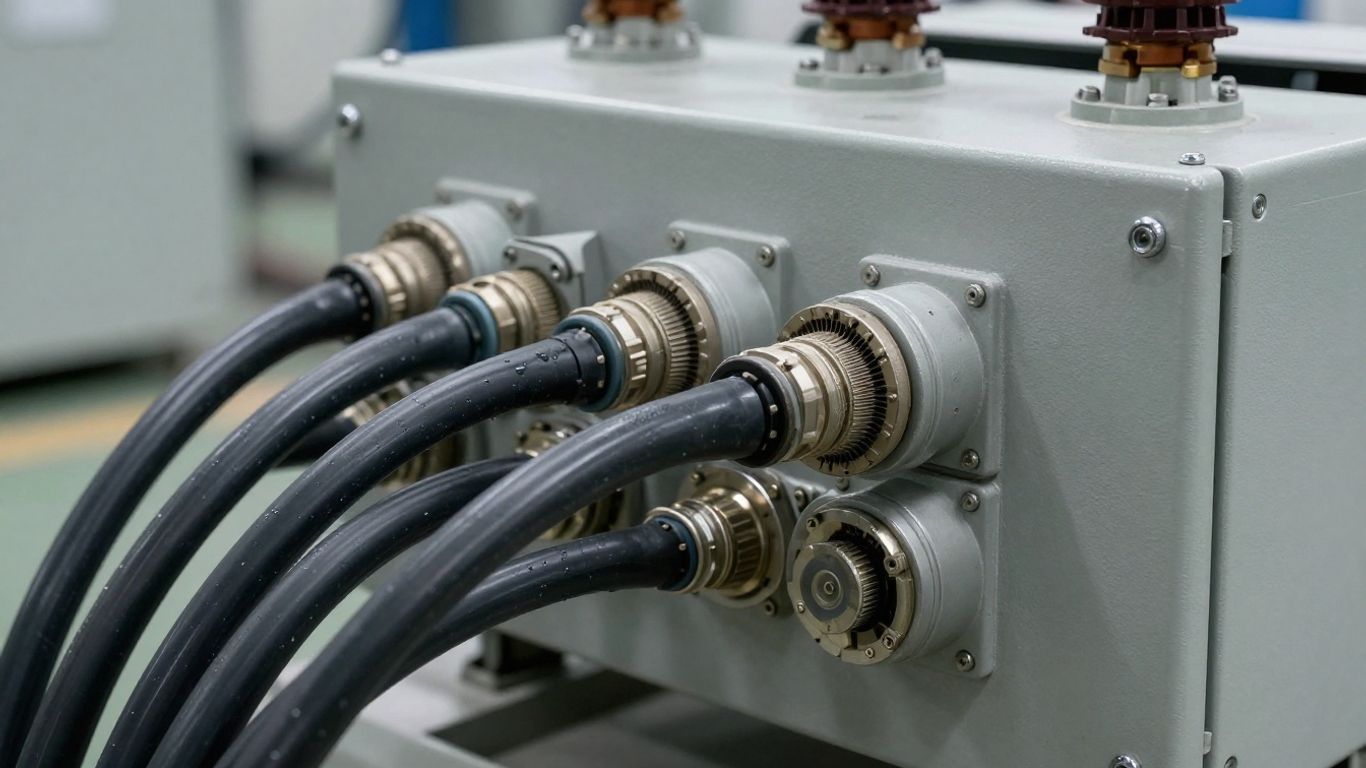
So, why bother with 480V 3-phase power? It’s not just about having more juice; it actually makes a lot of sense for certain operations. Think of it like using a bigger, more efficient engine for a heavy-duty truck instead of trying to haul a massive load with a compact car. It just works better.
Enhanced Efficiency and Power Delivery
One of the biggest wins with 480V 3-phase is how much more power you can move around without needing ridiculously thick wires. Because it’s three-phase, the power delivery is smoother and more consistent than single-phase. This means less energy gets wasted as heat during transmission. For places that need to run big motors or lots of equipment, this efficiency adds up. You get more work done for the energy you put in. It’s a pretty neat trick that the math behind three-phase power, involving that “root 3” factor (around 1.73), really shows how it can carry more power than single-phase at the same voltage and current levels. This is why you see it in factories and large commercial buildings – they need that robust power flow.
Reduced Conductor Size and Costs
Because 480V 3-phase power can deliver more power with less current compared to lower voltages, you can use smaller wires. This is a pretty big deal. Smaller conductors mean less copper or aluminum, which cuts down on material costs right from the start. Plus, running smaller wires is generally easier and quicker during installation, saving on labor too. Over long distances, the savings on wire alone can be substantial. It’s not just about the initial setup, either. Less current means less energy lost as heat along the wires, which contributes to better overall energy use and lower operating bills over time. You can even find 480V to 400V 3-phase transformers that help manage these systems.
Improved Equipment Longevity
Running large equipment, especially electric motors, on a stable 480V 3-phase system is a good thing for the gear itself. The balanced power flow helps motors start up smoothly and run without the kind of jolts or unevenness that can happen with single-phase power. This stability reduces stress on motor components, preventing overheating and wear. For machinery that runs constantly or cycles on and off a lot, like you’d find in manufacturing or water treatment plants, this means less strain, fewer breakdowns, and a longer lifespan for the equipment. It’s about keeping things running reliably and cutting down on unexpected downtime and repair bills.
The consistent, balanced power delivery of 480V 3-phase systems is a major plus for heavy-duty applications. It helps equipment run more smoothly, reduces wear and tear, and can lead to fewer maintenance issues over the long haul. This reliability is a key reason why it’s the go-to choice for demanding industrial and commercial environments.
Here’s a quick look at how the benefits stack up:
More Power, Less Loss: Efficiently moves large amounts of energy with less waste.
Cost Savings: Lower material costs for wiring and easier installation.
Equipment Protection: Smoother operation leads to longer equipment life and fewer repairs.
Operational Stability: Consistent power flow is vital for critical machinery and processes.
Safety And Compliance For 480V Systems
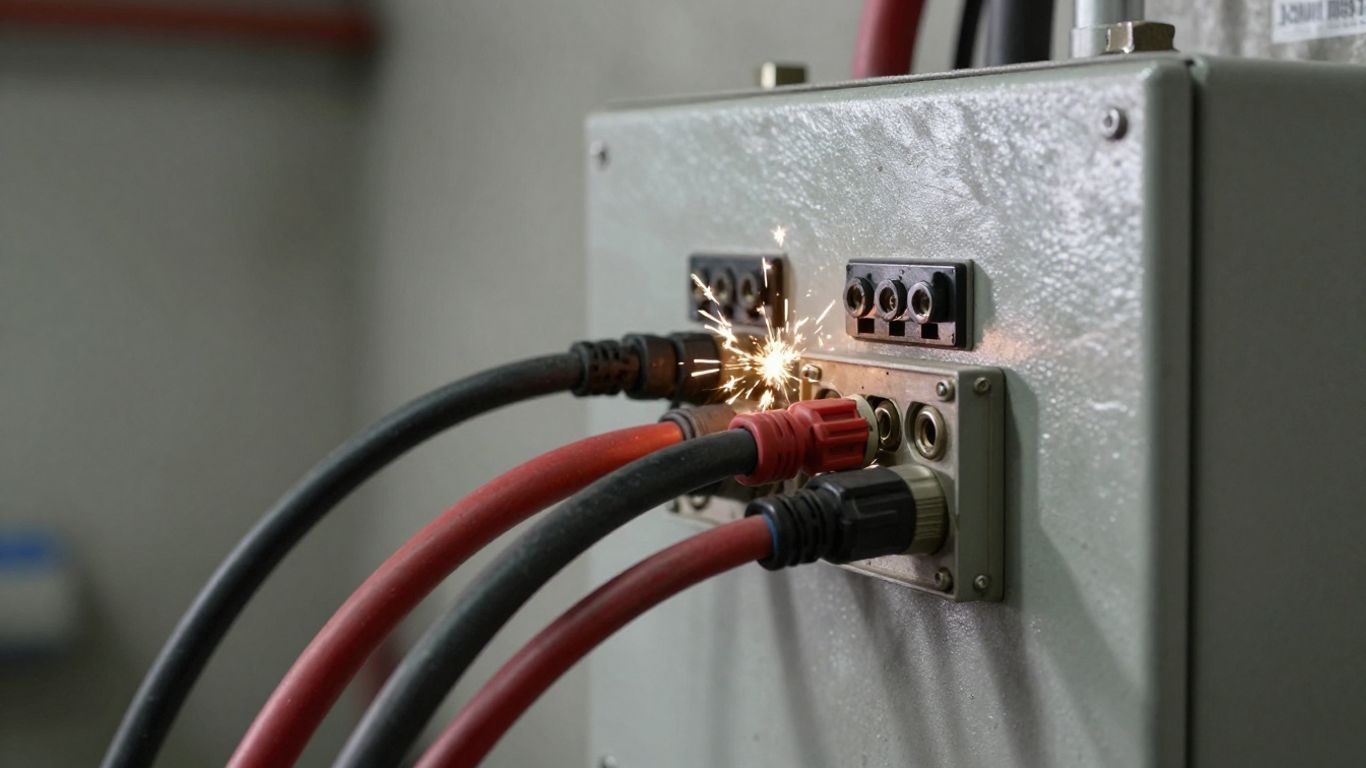
Working with 480V 3-phase power means you’re dealing with a serious amount of electricity. Because of this, safety and following the rules aren’t just suggestions; they’re absolutely necessary. It’s all about making sure everyone stays safe and that the equipment runs right.
Adhering To National Electrical Code
The National Electrical Code (NEC), or NFPA 70®, is the rulebook for electrical installations in the US. For 480V systems, several articles are particularly important. For instance, Article 110 covers general requirements, including working space clearances which get bigger with higher voltages. You’ll also find rules in Article 240 about overcurrent protection, making sure fuses and breakers are sized correctly for the load. Panelboard schedules, covered in Article 408, need to be clear and accurate, listing all the circuits and what they power. Always check the latest version of the NEC for the most up-to-date requirements.
Mitigating Arc Flash Hazards
One of the biggest dangers with 480V systems is an arc flash. This is a sudden release of electrical energy that can cause severe burns, blast waves, and flying debris. Properly identifying and labeling equipment is key to warning workers about these potential hazards. The NEC requires specific labels on equipment, and NFPA 70E provides the detailed procedures for working safely. This includes using the right Personal Protective Equipment (PPE) and, most importantly, establishing an electrically safe work condition before touching anything. This often involves Lockout/Tagout (LOTO) procedures.
Here’s a basic rundown of LOTO steps:
Preparation: Figure out all the energy sources involved using diagrams and schedules.
Shutdown: Turn off the equipment normally.
Isolation: Open the breaker or disconnect to isolate the power.
Lockout/Tagout: Apply your personal lock and tag to the isolating device.
Stored Energy Release: Check for and release any stored energy, like in capacitors.
Verification: Use a voltmeter to confirm there’s no voltage present. Test between phases and between each phase and ground.
Proper Identification And Labeling
Clear identification is vital. This isn’t just about knowing what a wire is, but also about understanding the system’s configuration and potential dangers. For 480V systems, conductor colors can vary, but industry standards often use brown, orange, and yellow for the ungrounded (hot) conductors. The grounded conductor (neutral) is typically white or gray. If there’s a high-leg delta system, that specific conductor must be marked orange. Equipment needs labels indicating the voltage, available fault current, and arc flash warning. This information helps qualified personnel make informed decisions and work safely. You can find more details on electrical safety ratings in resources like CAT ratings.
Working with 480V systems requires a solid understanding of electrical principles and safety protocols. Always refer to the latest editions of the NEC and NFPA 70E, and never take shortcuts when it comes to safety procedures like LOTO. If you’re unsure about any aspect of working with these systems, it’s always best to consult with a qualified electrician.
Wrapping It Up
So, there you have it. 480-volt, three-phase power isn’t just some random electrical term; it’s the workhorse behind a lot of the big stuff we see in factories and large buildings. It’s all about getting a lot of power where it’s needed, efficiently and reliably, especially for those big motors and machines. While it might sound complicated, understanding the basics, like how it differs from the power in our homes and why it’s set up the way it is, really helps paint the picture. Just remember, this kind of power means business, and working with it always requires a healthy dose of caution and know-how.
Installing three-phase power systems, phase converters, and transformers requires proper planning and professional installation to ensure safe operation and code compliance.
If your building needs three-phase power, voltage conversion, or transformer installation for specialized equipment, ADP Electrical can design a system tailored to your needs.
Contact ADP Electrical today for a free quote.
Frequently Asked Questions
What does ‘480V 3-Phase’ actually mean?
It’s a type of electrical power that uses three separate wires, each carrying an alternating current. These currents are timed perfectly, 120 degrees apart, so that power is always flowing smoothly. The ‘480V’ means that the voltage measured between any two of these three wires is about 480 volts. This is a lot of power, usually used for big machines and equipment in factories and large buildings.
Why is 3-phase power better than regular power for big jobs?
Think of regular power (like in your house) as one person pushing a swing. It works, but it’s not perfectly smooth. Three-phase power is like three people pushing the swing, perfectly timed. This makes the power flow much steadier and more constant, which is great for big motors and machinery. It also means less electricity is wasted as heat, and you can use thinner, cheaper wires to carry the same amount of power compared to lower voltages.
When would a business need 480V 3-phase power?
Businesses usually need this kind of power when they have large equipment that needs a lot of energy to run. This includes things like big industrial machines in factories, large air conditioning and heating systems for tall buildings, or powerful lighting for big areas like sports stadiums or warehouses.
Are there different ways to set up 480V 3-phase power?
Yes, there are two main ways, called ‘Wye’ and ‘Delta’. The Wye setup is like a star shape and it has an extra wire called a neutral. This is very useful because it can power both the big 480V machines and smaller 277V lights. The Delta setup is more like a triangle and usually doesn’t have a neutral wire, so it’s mostly used for equipment that needs exactly 480V.
Is 480V 3-phase power dangerous?
Yes, 480V is a high voltage and can be very dangerous if not handled properly. It’s much higher than the power you have in your home. Because of this, only trained and qualified electricians should work on these systems. They need to follow strict safety rules and wear special protective gear to avoid serious injury, like electrical shock or arc flash.
What’s the difference between 480V and lower voltages like 208V or 240V?
480V is a much higher voltage, meaning it can deliver more power. For the same amount of power, 480V uses less current (electrical flow). This is important because less current means less heat is generated in the wires, and you can use smaller, less expensive wires to transmit the power over long distances. Think of it like water pressure: higher pressure (voltage) can push more water (power) through a smaller hose (wire).
